
Digital vs Manual QA Testing: Which Saves Time, Improves Accuracy, and Protects Your Clinic


Dental X-ray quality assurance (QA) is required under Health Canada’s Safety Code 30, which mandates that clinics verify image quality and radiation performance regularly. But not all QA methods are created equal. Many clinics still rely on manual tools and visual checks originally designed for film X-rays, while others have adopted digital QA systems that automate testing and documentation.
This article breaks down the differences between manual and digital QA testing - how each works, where they fall short, and why digital methods are quickly becoming the new standard for accuracy, consistency, and safety.
1. Manual QA Testing: Time-Consuming and Inconsistent
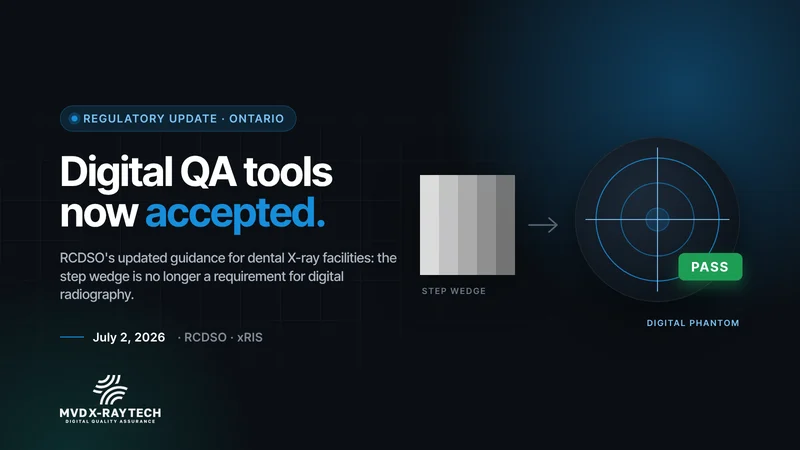
Traditional manual QA involves visual inspection using a step wedge or contrast tool. Staff take a test exposure and compare the shades of grey to a reference image.
While simple, this process has several major drawbacks:
- Subjectivity: Results depend on human judgment, lighting conditions, and monitor quality.
- Lack of traceability: Most clinics record results manually or not at all, making audits difficult.
- Limited metrics: Visual checks can’t measure key parameters such as spatial resolution, noise level, or pixel value consistency.
- Time drain: Each test must be performed, assessed, and logged by hand - often taking 10-15 minutes per unit daily.
In short, manual QA testing may satisfy the “attempt” at compliance, but it rarely provides the quantitative proof Safety Code 30 expects from modern digital systems.
2. Digital QA Testing: Automated, Quantitative, and Traceable
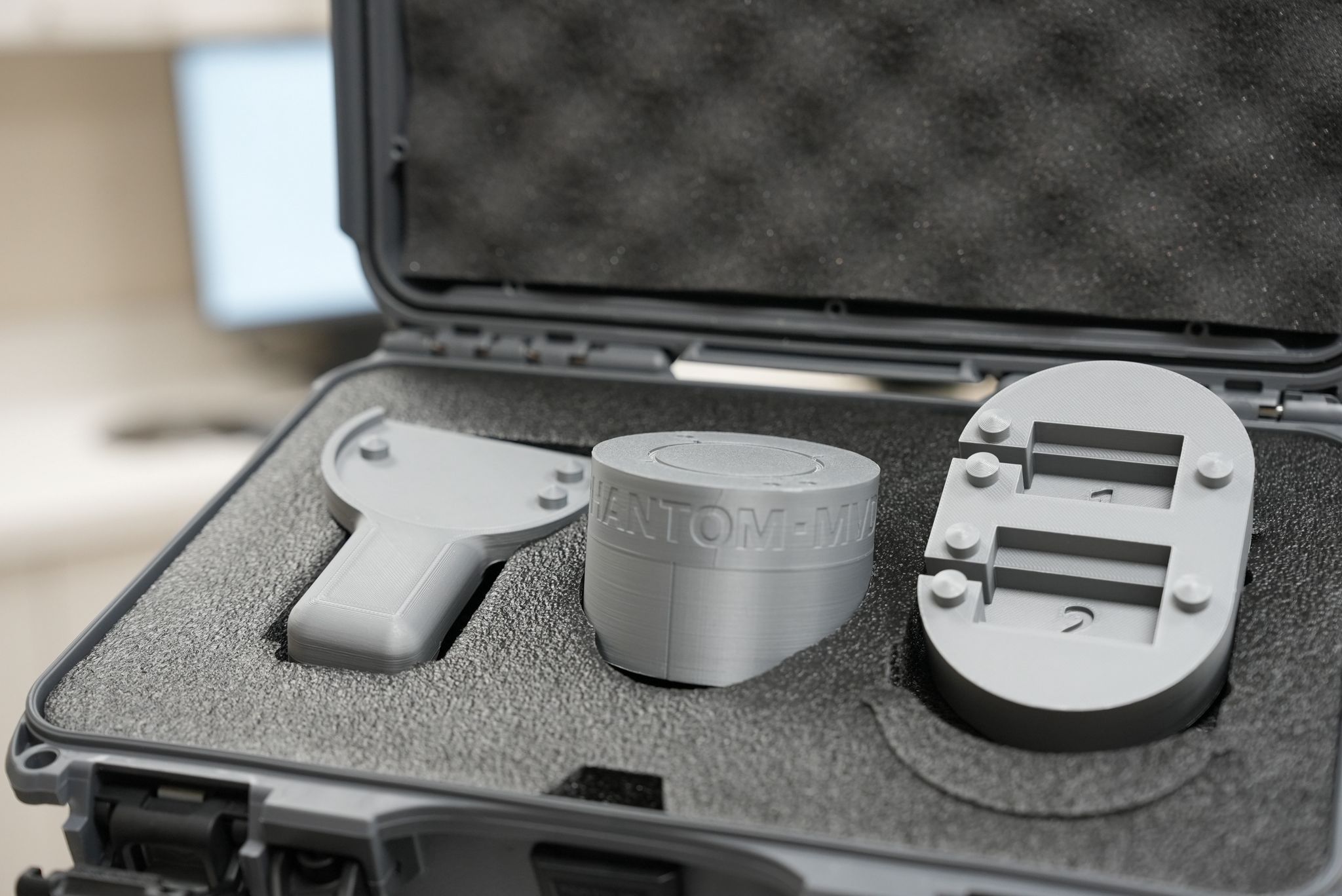
Digital QA systems, like Phantom XY by MVD X-Ray Technologies, automate what step wedges can’t. The process is straightforward:
- Capture a daily test image of the Phantom XY using your intraoral or panoramic X-ray unit.
- Upload it to the software or cloud portal.
- Receive instant digital metrics - contrast, density, uniformity, resolution, and noise - compared to your baseline.
This approach eliminates subjectivity and manual logging. Every test result is stored automatically, time-stamped, and accessible for audits or service reviews.
Advantages:
- Time efficiency: Daily QA in about two minutes per device.
- Objective data: Quantitative analysis, not visual estimation.
- Error detection: Identifies even subtle performance drifts before they affect diagnostic quality.
- Record retention: Cloud-based archiving ensures long-term traceability for regulatory inspections.
3. Safety Impact: Protecting Patients and Staff
Accurate QA directly impacts radiation safety. Poor calibration or unnoticed image degradation can lead to unnecessary retakes, doubling radiation exposure for both patients and staff. Digital QA systems detect these small inconsistencies early, allowing clinics to correct issues before image quality suffers or retakes occur. By maintaining consistent exposure performance and image quality, clinics not only stay compliant but also demonstrate a measurable commitment to patient protection.
4. The Bottom Line
Manual QA testing was acceptable in the film era - but it no longer meets the needs of modern digital radiography. Digital QA testing offers measurable results, faster workflows, and full traceability that is aligned with the expectations of Safety Code 30.
Clinics using automated solutions like Phantom XY can ensure consistent image quality, minimize radiation exposure, and save valuable staff time each day.
.jpeg)