What Is Safety Code 30? A Guide for Canadian Dental Clinics


If you run a dental clinic in Canada, Safety Code 30 is the document that quietly shapes how you use your X-ray equipment every day.
Most teams have heard the name. Far fewer feel confident explaining what it actually requires.
This guide breaks Safety Code 30 down in plain language, so you know what matters and where most clinics fall short.
What Is Safety Code 30?
Safety Code 30 is Health Canada's set of requirements and guidance for the safe use of X-ray equipment in dental and medical settings.
It covers how equipment should perform, how staff and patients should be protected, and how image quality should be maintained over time.
In practice, it sets the baseline for what "safe and compliant" looks like in a dental radiography room.
What Safety Code 30 Actually Asks For
The details are technical, but the core expectations are simple:
- X-ray equipment that performs consistently and accurately
- Routine quality assurance to catch problems early
- Proper shielding and exposure practices for patients and staff
- Clear, verifiable records of testing and maintenance
If any of these slip, your clinic can drift out of alignment, often without anyone noticing.
Why Quality Assurance Sits at the Centre
Quality assurance is where Safety Code 30 becomes a daily responsibility rather than an annual checkbox.
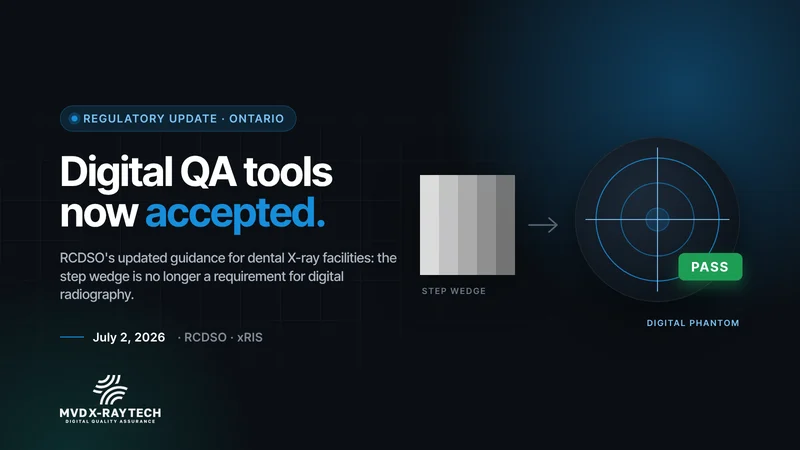
Consistent digital quality assurance confirms that every image your clinic produces is accurate and that exposure stays as low as reasonably achievable.
Without it, small issues like calibration drift or declining image clarity build silently until they affect diagnosis.
Where Most Clinics Fall Short
Compliance rarely fails because a clinic ignores the rules. It slips because of small gaps:
- QA tests skipped on busy days
- Records kept on paper and hard to verify
- Inconsistent processes between team members
- No early warning when equipment starts to drift
During an inspection, these gaps are exactly what stand out.
How to Stay Aligned with Safety Code 30
The clinics that stay compliant make QA effortless instead of optional.
That usually means moving away from memory and paper toward a structured, automated workflow that records every test as it happens.
The Phantom XY System was built for exactly this, helping clinics run daily QA in minutes and keep inspection-ready records without the manual effort.
Safety Code 30 does not have to be complicated. It just has to be consistent.
If you want to see how a fully digital QA workflow keeps your clinic aligned, you can book a demo and see it in action.