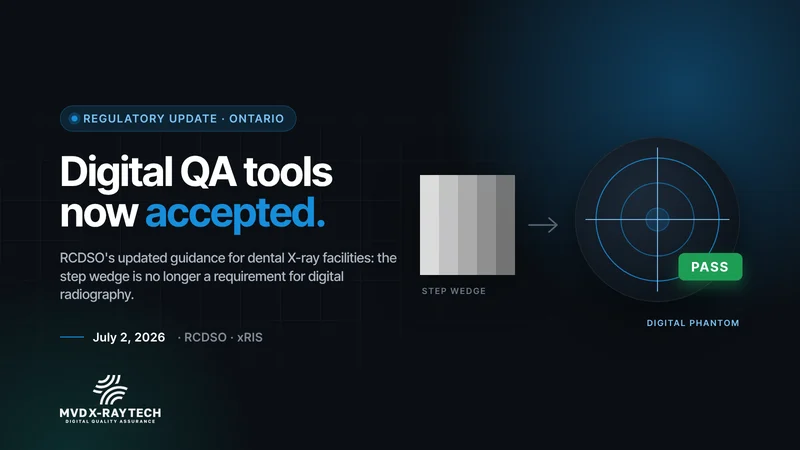
Safety Code 30 Checklist for Dental Clinics (2026 Update)

If you run a dental clinic in Canada, staying compliant with Safety Code 30 is quickly becoming a daily responsibility, not just an occasional task.
The challenge is not understanding the rules. It is making sure nothing gets missed in practice.
This checklist breaks down what your clinic should be doing to stay aligned with current expectations and avoid common compliance gaps.
Daily X-Ray Quality Assurance
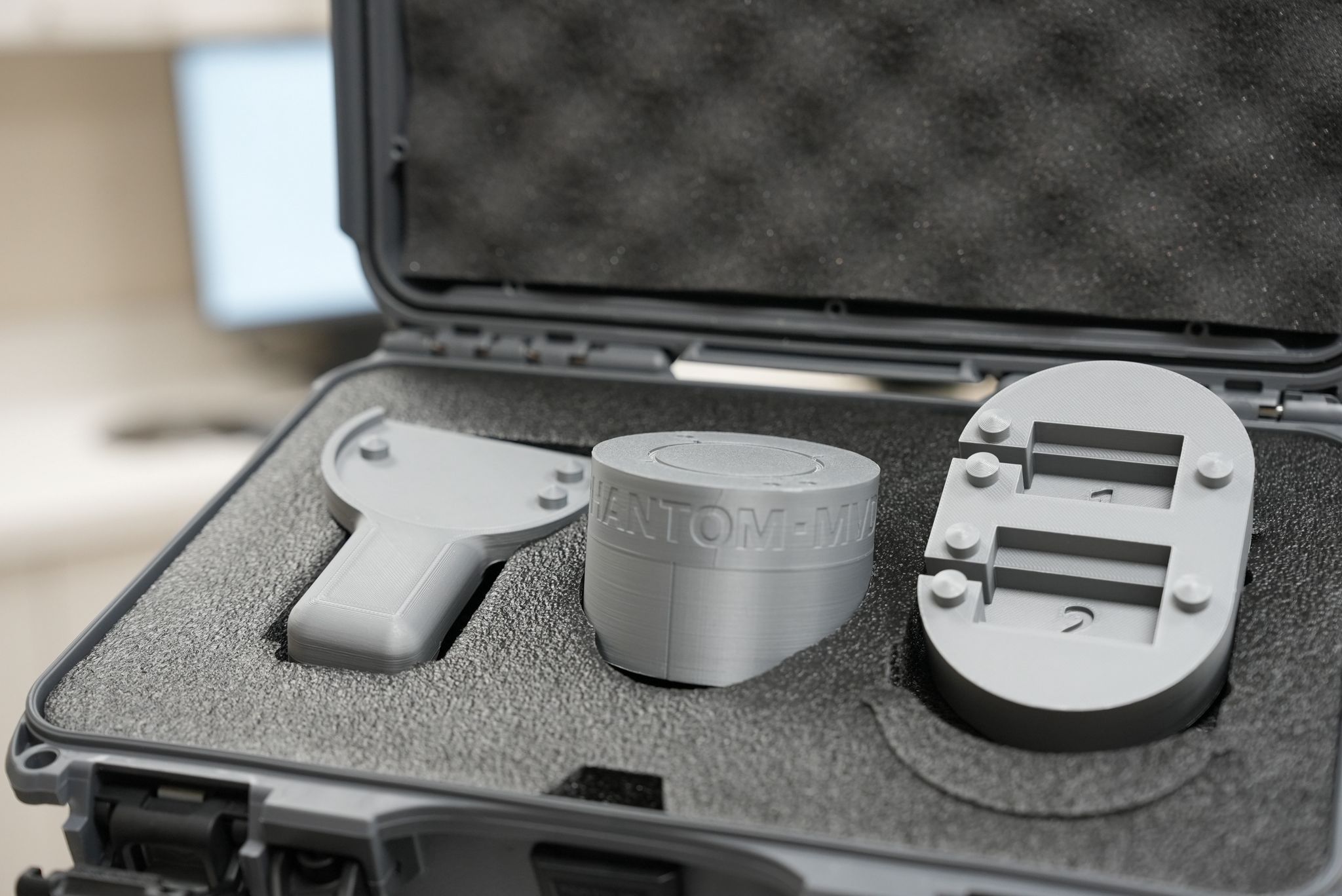
At the core of Safety Code 30 is consistency. Clinics are expected to monitor image quality on a routine basis.
Your clinic should be:
- Performing daily QA tests on X-ray systems
- Checking for image consistency and clarity
- Identifying any artifacts or irregularities
- Ensuring results are recorded every single day
Missing even a few days can create gaps that show up during inspections.
Documentation and Record Keeping
Doing the tests is only half of compliance. Being able to prove it is just as important.
You should have:
- Clear, complete QA records for each day
- Organized logs that are easy to review
- No missing entries or unexplained gaps
- Records that can be quickly accessed during an inspection
Inconsistent documentation is one of the most common reasons clinics run into issues.
Equipment Monitoring and Maintenance
X-ray equipment must be kept in a condition that ensures consistent performance.
Your clinic should:
- Monitor equipment performance regularly
- Address any drop in image quality immediately
- Keep records of maintenance and servicing
- Ensure calibration is up to date
Small issues can develop into larger problems if they are not caught early.
Radiation Safety Practices
Safety Code 30 is built around minimizing unnecessary exposure for patients and staff.
Make sure your clinic:
- Uses proper exposure settings for each patient
- Avoids unnecessary retakes
- Follows standard radiation protection protocols
- Maintains shielding and safety measures where required
Consistent QA plays a direct role in reducing avoidable exposure.
Staff Training and Responsibility
Compliance is not just a system. It depends on people following it correctly every day.
Your clinic should ensure:
- Staff are trained on QA procedures
- Responsibilities are clearly assigned
- Processes are followed consistently
- There is accountability for missed or incomplete tasks
When QA depends too heavily on memory, mistakes happen.
Inspection Readiness
At any point, your clinic should be able to demonstrate that it is compliant.
Ask yourself:
- Can you show complete QA records immediately?
- Are your logs consistent with no gaps?
- Can you explain your QA process clearly?
- Are all records organized and easy to verify?
If the answer to any of these is no, there is a risk during inspection.
Where Most Clinics Fall Short
Most clinics do not fail because they ignore QA completely. They fall short because of:
- Missed days in testing
- Incomplete or messy records
- Inconsistent processes between staff
- Overreliance on manual tracking
These issues are preventable, but only with the right system in place.
Next Steps
If you are reviewing this checklist and noticing gaps, now is the time to fix them before they become compliance issues.
MVD helps clinics simplify daily QA, maintain consistent records, and stay fully prepared for inspections without relying on manual logs.
You can book a demo to see how a digital QA workflow removes uncertainty and keeps everything organized automatically.