HARP Act Explained: X-Ray Compliance for Ontario Clinics


If you run a dental clinic in Ontario, the HARP Act is part of your compliance picture.
Understanding it makes staying compliant far less confusing.
Here is a plain-language guide to the HARP Act for dental clinics.
What the HARP Act Is
HARP stands for the Healing Arts Radiation Protection Act.
It is Ontario legislation that governs the safe use of X-ray machines for healing arts purposes, including dentistry.
What It Focuses On
At its core, the HARP Act is about protecting patients and staff from unnecessary radiation.
That includes how equipment is used, maintained, and overseen.
How It Connects to Safety Code 30
The HARP Act works alongside Health Canada's Safety Code 30.
Together, they point Ontario clinics toward consistent QA, proper equipment performance, and documented compliance.
What Clinics Should Focus On
In practice, that means:
- Consistent quality assurance
- Well-maintained equipment
- Clear, verifiable records
- Radiation safety practices grounded in ALARA
Staying Compliant With Less Effort
Most HARP-related gaps come from manual processes and incomplete records.
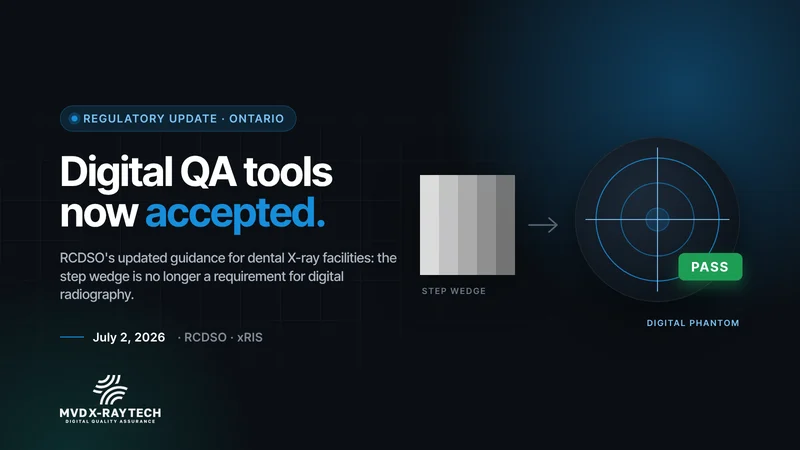
The Phantom XY System helps Ontario clinics keep QA consistent and records inspection-ready.
Want to simplify HARP Act compliance? Book a demo.