Les meilleurs systèmes d'AQ numérique pour les cliniques dentaires en 2025

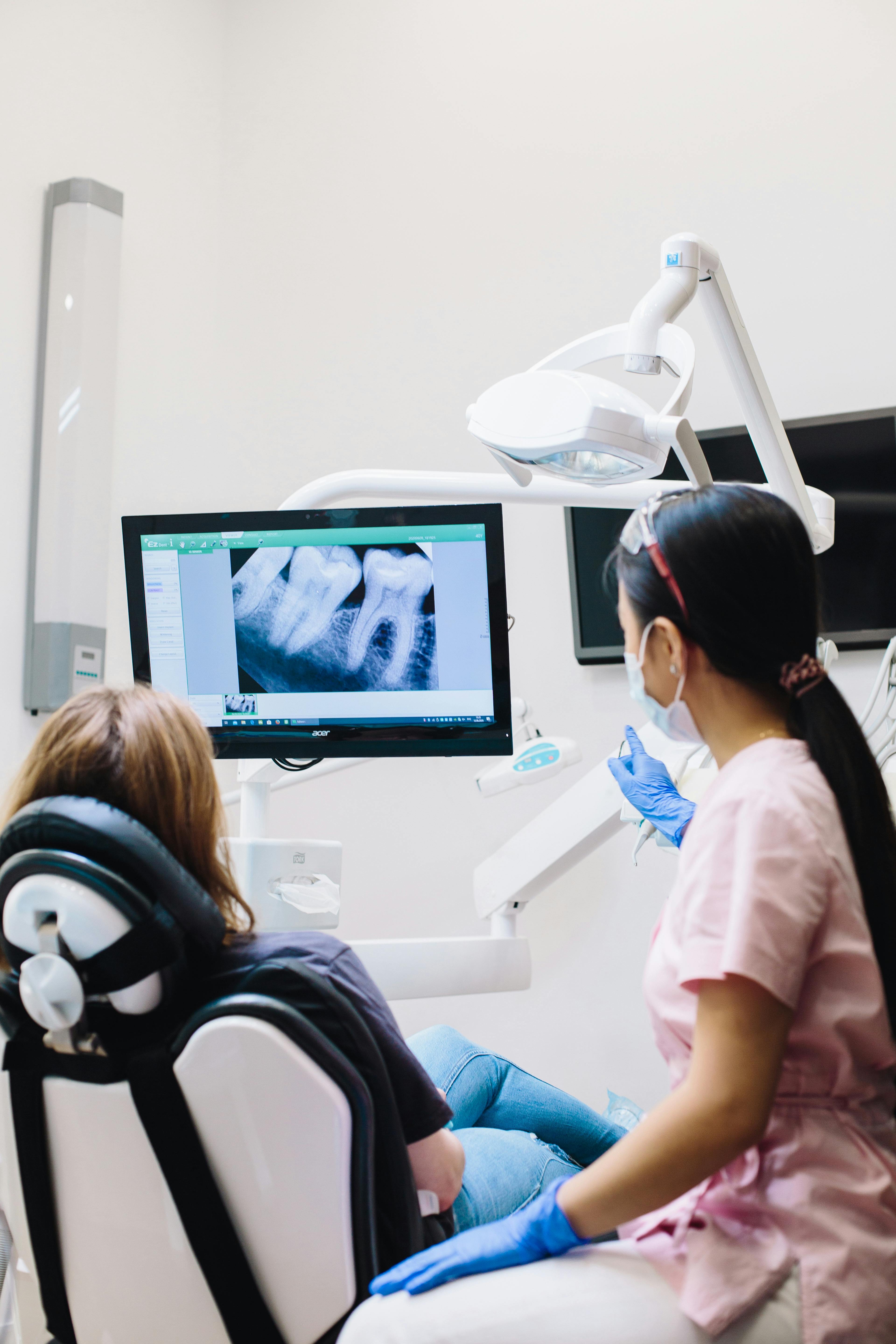
En imagerie dentaire moderne, l'assurance qualité (AQ) n'est plus une corvée annuelle; c'est une composante centrale de la sécurité clinique et de la conformité. À mesure que les organismes de réglementation resserrent les normes en vertu du Code de sécurité 30 de Santé Canada et des cadres d'inspection provinciaux, les systèmes d'assurance qualité numérique sont devenus essentiels pour toute clinique dentaire qui exploite de l'équipement radiographique.
Pourtant, avec autant de produits qui prétendent automatiser et simplifier les tests d'AQ, il est difficile de savoir quels systèmes offrent réellement une précision, une efficacité et un soutien à la conformité mesurables. Nous présentons ci-dessous les critères clés qui définissent une solution d'AQ numérique fiable, puis passons en revue certains des meilleurs systèmes offerts en 2025, y compris leurs différences en matière de fonctionnalités, de flux de travail et de valeur à long terme.
Pourquoi l'AQ numérique n'est plus facultative
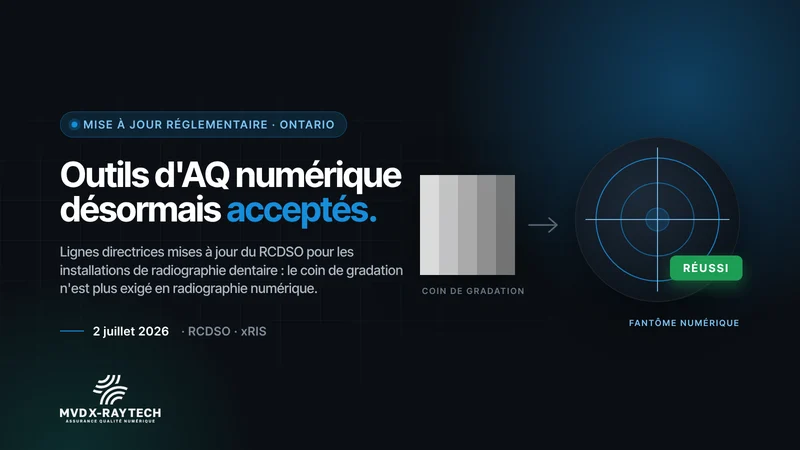
Les méthodes manuelles d'AQ, comme l'utilisation d'un coin sensitométrique et l'évaluation visuelle des expositions radiographiques, servent les cliniques depuis des décennies. Elles introduisent toutefois une variabilité humaine, grugent un temps clinique précieux et répondent rarement aux attentes actuelles en matière de traçabilité.
Un système d'AQ numérique remplace les approximations par des données mesurables et reproductibles.
En analysant automatiquement les images pour le contraste, la netteté, l'uniformité de la densité et la précision géométrique, ces outils assurent une qualité diagnostique constante tout en réduisant au minimum l'exposition inutile aux rayonnements pour les patients comme pour le personnel.
Les cliniques qui adoptent des flux de travail d'AQ entièrement numériques profitent de ce qui suit :
- Conformité automatisée au Code de sécurité 30 et aux principes ALARA.
- Rapports instantanés pour les inspections et les audits.
- Réduction des reprises, ce qui protège les patients et fait gagner du temps.
- Confiance diagnostique accrue pour les systèmes intraoraux, panoramiques et CBCT.
Critères clés d'un système d'AQ numérique fiable
Si vous évaluez des solutions d'AQ numérique pour votre clinique, voici les cinq piliers qui distinguent les excellents systèmes des logiciels génériques :
- Résultats constants
Le système doit donner les mêmes résultats fiables chaque fois, peu importe qui l'utilise. - Tests automatiques
Le système doit vérifier la qualité d'image par lui-même, sans que le personnel ait à juger manuellement si une radiographie « semble correcte ». - Tenue de dossiers simple
Les résultats des tests doivent s'enregistrer automatiquement afin que vous puissiez démontrer la qualité en tout temps. - Respect des normes de sécurité
Le système doit respecter les lignes directrices canadiennes en matière de sécurité dentaire et les exigences d'inspection. - Bon soutien et mises à jour
L'entreprise doit maintenir le logiciel à jour et demeurer facile à joindre si vous avez besoin d'aide.
Le virage vers l'AQ propulsée par l'IA
L'intelligence artificielle transforme la façon dont les cliniques mesurent la qualité d'image.
Plutôt que de s'appuyer sur des plages de gris statiques ou une évaluation subjective, les systèmes d'IA détectent des écarts d'image subtils, invisibles à l'œil humain. À l'aide d'algorithmes de vision par ordinateur, ils évaluent le bruit, la netteté et l'uniformité de l'exposition sur des milliers de pixels en quelques secondes.
Pour les équipes dentaires, cela signifie :
- Une rétroaction plus rapide après chaque exposition de test.
- Des mesures quantitatives plutôt que des jugements qualitatifs « bon ou mauvais ».
- Une détection précoce de la dérive de l'équipement avant qu'elle nuise au diagnostic des patients.
Le Phantom Cloud AI de MVD représente cette nouvelle génération d'AQ numérique : il utilise des algorithmes entraînés pour évaluer chaque image d'AQ, consigne automatiquement les résultats et affiche les critères de réussite ou d'échec en temps réel. Le résultat va au-delà de l'automatisation : c'est une standardisation qui réduit l'influence des biais de l'opérateur dans l'ensemble du réseau de cliniques.
Conformité et préparation aux audits
À leur arrivée, les inspecteurs veulent voir de la constance et de la traçabilité.
Un flux de travail d'AQ numérique conforme consigne automatiquement chaque date de test, chaque appareil radiographique et chaque résultat, sans dépendre de feuilles de calcul manuelles ni de registres papier.
Les systèmes modernes comme Phantom Cloud AI génèrent :
- Des rapports prêts pour l'audit, exportables en PDF ou en CSV.
- Des dossiers horodatés conservés en toute sécurité pendant 10 ans.
- Des rappels automatisés pour les intervalles de test mensuels ou trimestriels.
Cette piste de vérification numérique est inestimable lors des contrôles de conformité et rassure les organismes de réglementation : la clinique respecte les limites d'exposition du principe ALARA (As Low As Reasonably Achievable, soit aussi bas que raisonnablement possible).
Choisir le bon système pour votre clinique
Choisir le meilleur système d'AQ numérique n'est pas qu'une question de fonctionnalités. C'est une question d'adéquation.
Posez-vous ces questions avant de décider :
- Combien d'appareils radiographiques exploitons-nous, et de quels types (intraoral, panoramique)?
- Avons-nous besoin d'un accès infonuagique pour le suivi de l'AQ de plusieurs emplacements?
- Quelle est notre fréquence d'inspection en vertu du Code de sécurité 30 ou des exigences des autorités locales?
- Préférons-nous une automatisation évaluée par l'IA ou une supervision manuelle partielle?
- Nos données sont-elles protégées selon les normes canadiennes en matière de vie privée et de soins de santé?
Si votre objectif est de moderniser la conformité, de simplifier le flux de travail et de réduire l'erreur humaine, une plateforme infonuagique propulsée par l'IA constitue l'investissement le plus durable. Des systèmes comme Phantom Cloud AI et le Phantom XY System 3D combinent automatisation, précision et traçabilité, ce qui permet aux cliniques d'atteindre des résultats d'AQ de premier ordre avec un minimum d'effort manuel.
L'essentiel
Les systèmes d'AQ numérique sont passés d'options facultatives à des outils cliniques essentiels. Les meilleures solutions de 2025 ne se contentent pas de tester la qualité d'image : elles s'intègrent directement à l'infrastructure numérique d'une clinique moderne, assurant conformité, sécurité et tranquillité d'esprit pour les patients comme pour les praticiens.
Si vous évaluez votre prochaine mise à niveau en AQ, recherchez des plateformes qui priorisent l'automatisation, l'intégrité des données et l'alignement réglementaire.
Avec ces trois piliers en place, votre clinique gardera une longueur d'avance sur les inspections, réduira au minimum l'exposition aux rayonnements et offrira chaque jour des diagnostics plus nets et plus fiables.